If you're still clicking in the cloud console, you're building technical debt you can't see
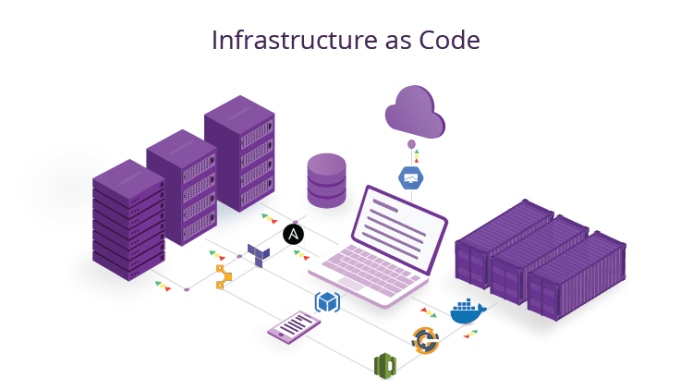
Every time you manually configure cloud infrastructure through a web console, you create undocumented, unrepeatable state. Infrastructure as Code (IaC) replaces clicking with code, your cloud resources are defined in files, stored in Git, and applied automatically. For African teams where one engineer often manages all infrastructure, IaC is the difference between a recoverable system and one that only works while that person is available.
You set up your server by clicking through the AWS console. You configured the security group, the load balancer, the database. You remember most of it. Your colleague remembers less. The documentation says "ask Mbarga, he set it up." Mbarga has left. This is the infrastructure debt you cannot see until you need to pay it.
What "clicking in the console" actually costs you
Manual cloud configuration through a GUI creates what engineers call "snowflake infrastructure", a unique setup that nobody fully understands, cannot be exactly reproduced, and is fragile under change. The cost is not visible until something breaks.
Scenario one: your server crashes and you need to rebuild it. Without IaC, you rebuild from memory, hoping you remember every security group rule, environment variable, and service configuration. You will miss something. Something will break differently than before. Debugging will take hours or days.
Scenario two: you want to create a staging environment identical to production. Without IaC, you click through the console again, making slightly different choices each time. Your staging environment is never quite the same as production, which means bugs only appear in production. The debugging is harder because the environments are different.
Scenario three: your infrastructure engineer leaves. Nobody else knows exactly what was configured. You have screenshots, maybe some notes. You are one incident away from a crisis. These scenarios are not edge cases. They happen to real teams regularly, including many in Cameroon and across Africa where small teams manage complex infrastructure.
What Infrastructure as Code actually is
Infrastructure as Code means writing your cloud resource definitions in text files, code, that can be version-controlled, reviewed, tested, and applied automatically. Instead of clicking "Create EC2 Instance" in the AWS console, you write a Terraform file that says: create an EC2 instance of type t3.small, in region eu-west-3, with this security group, this key pair, these tags.
Run terraform apply and Terraform creates exactly what you described. Run it again on a new account and you get an identical environment. Store the code in Git and you have a complete audit trail of every infrastructure change, who made it, when, and what changed.
IaC is not just automation. It is executable documentation. Reading a Terraform file tells you exactly what infrastructure exists and how it is configured, more reliably than any manually-written doc, because the code is the actual truth.
Terraform: the IaC tool to start with
Terraform by HashiCorp is the most widely adopted IaC tool. It is cloud-agnostic, the same tool manages AWS, GCP, Azure, DigitalOcean, and dozens of other providers. The configuration language (HCL, HashiCorp Configuration Language) is readable and not difficult to learn.
The Terraform workflow has three steps: terraform plan shows you what will change before you apply it. terraform apply makes the changes. terraform destroy tears down what you built. This dry-run capability is powerful, you review the plan before anything changes in production.
Terraform state tracks what Terraform has built. Store state in a remote backend (S3 + DynamoDB for AWS, GCS for GCP) so the entire team shares the same view of infrastructure. Never store Terraform state only on a local machine.
IaC for small African teams: the resilience argument
In Cameroon and across Central Africa, engineering teams are often small, one to three people managing production infrastructure. This creates a key-person risk that IaC directly addresses. If your infrastructure is fully defined in Terraform code, any engineer on the team can understand, modify, or rebuild it. If it exists only in one person's head and a series of console clicks, you have a single point of failure in your organisation.
IaC also enables disaster recovery plans that are actually executable. Many African businesses have "disaster recovery plans" that amount to "recreate everything." With IaC, disaster recovery means running code against a new region or account. The difference in recovery time is hours versus days.
For teams just starting with IaC in Cameroon, the practical first step is straightforward: pick your next new infrastructure resource (a new server, a new database, a new storage bucket) and provision it with Terraform instead of the console. Do not try to retroactively codify everything at once. One resource at a time builds the habit and the knowledge.
Getting started: your first Terraform configuration
Install Terraform (free, a single binary). Create a directory for your infrastructure code. Create a main.tf file. Define your provider (AWS, GCP, etc.) and one resource, a simple S3 bucket or a small VM.
Run terraform init to initialise. Run terraform plan to see what it will create. Run terraform apply to create it. Check the cloud console, your resource is there, exactly as defined. That is IaC. Now version-control the code, share it with your team, and never click that particular resource into existence again.
Key takeaways
- Manual cloud console configuration creates invisible technical debt, undocumented, unrepeatable infrastructure that fails when you most need it.
- Infrastructure as Code replaces clicks with code: version-controlled, reviewable, repeatable, and self-documenting.
- Terraform is the tool to start with, cloud-agnostic, well-documented, and industry-standard across Africa and globally.
- For small African teams managing critical infrastructure, IaC eliminates key-person risk and makes disaster recovery an executable process rather than a hope.
Frequently asked questions
Infrastructure as Code (IaC) is the practice of managing and provisioning cloud infrastructure through machine-readable configuration files rather than manually through a UI. Your servers, databases, networks, and security groups are defined in code, version-controlled in Git, and applied automatically.
Terraform is the most widely used IaC tool and the best starting point for most teams. It works across all major cloud providers, has excellent documentation, and has a large community. Most engineers can write basic Terraform after a few hours of practice.
Yes, especially for small teams. When one or two people manage all cloud infrastructure, documentation and repeatability are critical. IaC is both documentation and automation: it records exactly what infrastructure exists and allows it to be recreated reliably. If the infrastructure engineer leaves, the code remains.
If your infrastructure is defined in code, recovery from a disaster means running terraform apply against a new region or account. Without IaC, disaster recovery means reconstructing infrastructure from memory and incomplete documentation. The difference in recovery time can be hours versus days.
Sources
- HashiCorp. "Introduction to Terraform." HashiCorp Developer, 2026.
- HashiCorp. "Get started with Terraform on AWS." HashiCorp Developer, 2026.
- HashiCorp. "Remote state." Terraform Documentation, 2026.
- Kief Morris. "Infrastructure as Code, 3rd Edition." O'Reilly Media, 2023.
Ready to stop clicking and start coding your infrastructure? Kaevor helps teams across Cameroon and Africa implement Infrastructure as Code with Terraform, from first file to full production setup. Message us on WhatsApp, we respond same day.
Chat on WhatsApp →